





Bank of America's Subscription Finance Group has made some recent promotions, including: Jose Liz-Moncion was promoted to Managing Director, and Maddie Barnhart and Caitlin Schwietering were promoted to Vice President. Congrats to all!

Wells Fargo’s Subscription Finance Group has made some recent promotions, including: Michael Cardani was promoted to Managing Director; Hugh Dixon, Dominik Kania, Tim Parrish and Elena Yaichkova were promoted to Director; Matt Fernandez, Ryan Kennedy and Sara Panzeri were promoted to Vice President; and Hamlet Alvarado and Jack Fitzsimmons were promoted to Associate. Congrats to all!
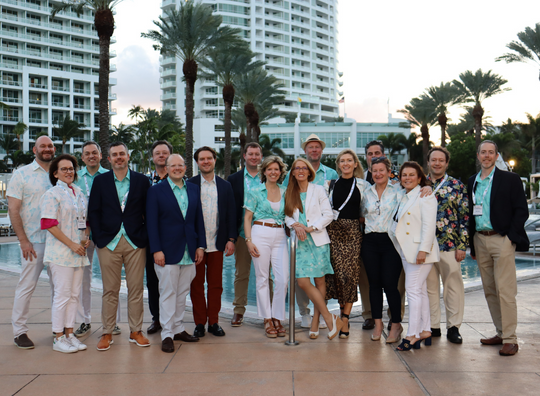
The 12th Annual Global Fund Finance Symposium just wrapped up in Miami, and from all the buzz we observed – and experienced first-hand – it was another wonderful opportunity for the industry to come together for some serious learning, valuable networking and enjoyable socializing with friends both old and new.

At the outset of every credit agreement negotiation, the implicit goal is to reach an agreement on representations and covenants that allows the Fund to operate as needed while also protecting the lender(s) against current and potential risks. Despite these best laid plans, there are times when the Fund is unable (or will be unable) to comply with the credit agreement. Virtually all credit agreements have a reporting covenant that requires the Fund to provide notice of any potential default or event of default at such time that a covenant has not been complied with or a representation was inaccurate when made. It is at this point that the Fund will inevitably ask for a waiver or a consent. These terms are often used interchangeably, but they have differing uses in different contexts.
Coming off of the close of a badly bruised broadly syndicated loan market in 2022, it is no surprise that the global Fund Finance Association kicked off its 12th annual conference in Miami with a conversation with the “Titans in Finance.”
Side letters are an important component of most fund finance deals. They are reviewed by lenders in connection with due diligence reviews (i) for subscription line facilities to determine the rights and obligations of investors in respect of capital commitment collateral and (ii) for NAV facilities to determine the liquidity and information rights attached to equity interest collateral. The SEC is expected to revert shortly on a proposed rule published last year that, if adopted, could impact the substance of side letters.


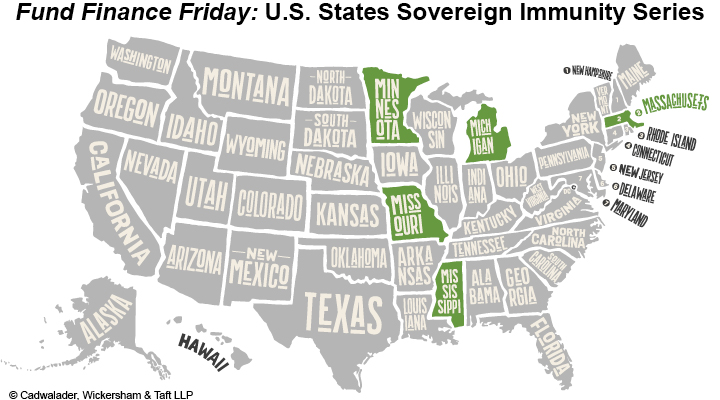
We are back today to continue along with our tasting menu of state sovereign immunity. In our fifth installment in the series, we will visit Massachusetts, Michigan, Minnesota, Mississippi and Missouri.



As the Fontainebleau once again prepares for an influx of fund finance professionals to its restaurants and nightclubs, we got to thinking about another kind of club (those funds registered with CIMA under the Private Funds Act) and what it might take for one of those funds to have the equivalent of a Dwayne “The Rock” Johnson-sized bouncer come and take them out of that club (CIMA being the relevant 300lb bouncer here!). Throughout all of the discussions from 2020 up until the present day, in relation to the Cayman Islands PF Act one of the common questions from lenders looking to analyse their risk was: “What does a de-registration of a private fund by CIMA look like and when could it happen?”




We are often asked by clients and non-Irish law firms in the context of fund finance transactions about using fund structures established under the revamped Irish Investment Limited Partnership ("ILP") regime, and, in particular, how ILPs compare to similar structures in other jurisdictions such as Lux SCSps and Cayman ELPs. We have set out a brief (and hopefully helpful) summary of these matters here.
While rising interest rates and other market data lead us to believe there will be a slowdown in fundraising, this challenging market could make opportunities in the secondary market more attractive. To cope with today's market volatility, lenders are capitalizing on smaller facilities with more flexibility to react to the different borrower profile they're seeing. Borrowers, on the other hand, are taking a more proactive approach by looking at other creative solutions, such as bespoke sub lines, hybrids and NAV lines, and even continuing step-profile fundraising to get new vehicles off the ground. Read more of what RBS believes 2023 might hold in store here.