




Featured

As the fund finance industry has matured, investment managers and lenders alike have sought increasingly efficient and flexible ways to structure credit facilities across expanding fund platforms. Sponsors today generally manage multiple funds with differing investment strategies while lenders are navigating borrower relationships, balance-sheet optimization and evolving syndication dynamics.
As the umbrella facility has continued to evolve and a new form, the master credit facility, has emerged to provide even more optionality to market participants. This article distills the differences from an operational, documentation and practical perspective so you can implement these important structuring tools in your next relevant facility.
Articles
As the subscription credit market continues to mature, side letter diligence has remained a key component of both underwriting and credit agreement negotiation.
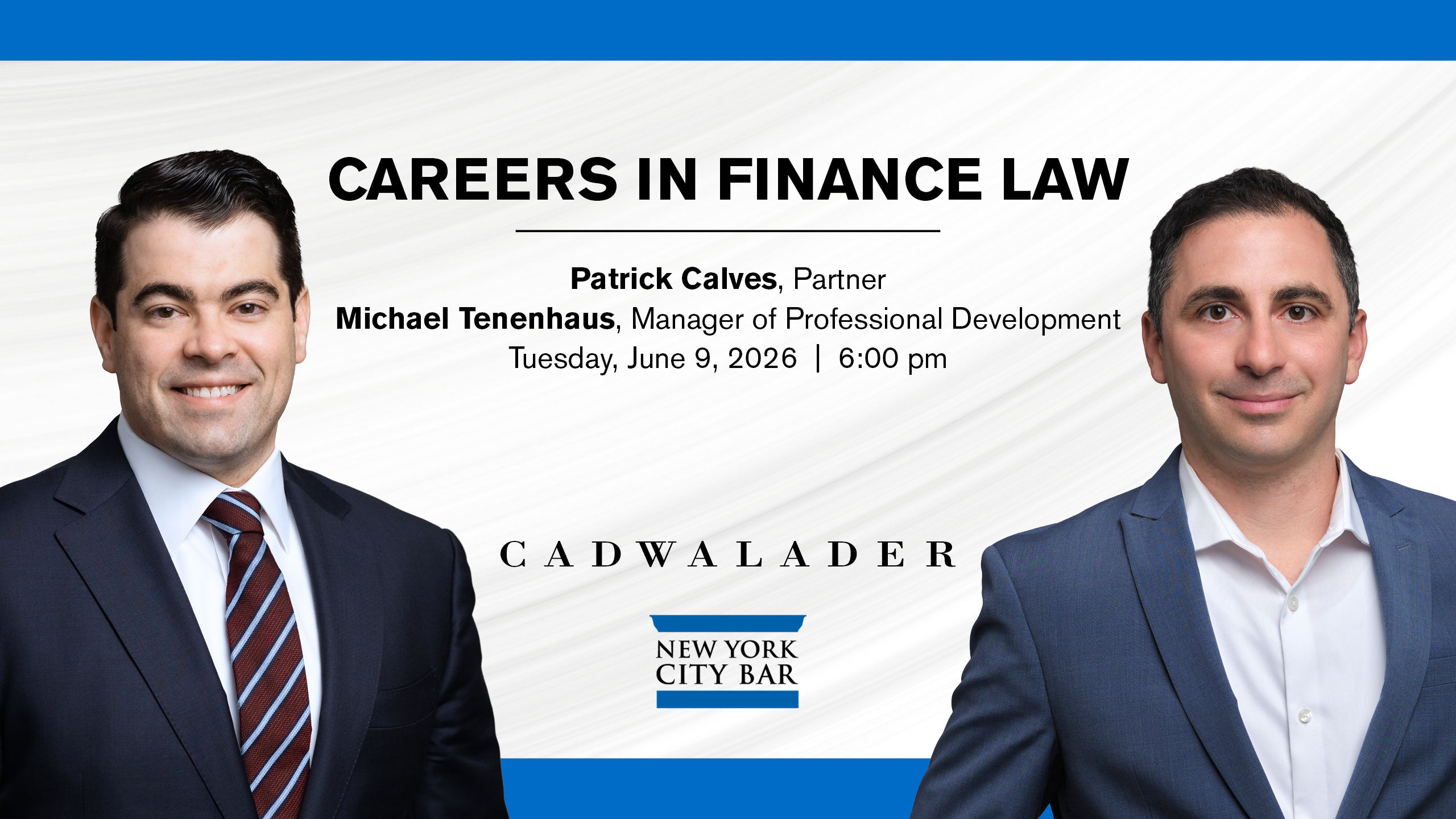
Cadwalader Partner Patrick Calves and Manager of Professional Development Michael Tenenhaus will participate in the Careers in Finance Law program at the New York City Bar Association on Tuesday, June 9, from 6:00 p.m. to 8:00 p.m.
Cadwalader Fund Finance Partner George Pelling will be a panelist at the 10th Annual European Fund Finance Symposium, taking place in London on Wednesday, June 24.
We’d like to extend our congratulations to the five newly appointed members of the FFA Board, named yesterday.
We see several implications for fund finance stemming from a steeper yield curve in 2026. Borrowing at the short end of the curve—particularly via subscription facilities and asset‑backed revolving capacity—has become significantly more compelling for sponsors.
As a result, selective substitution away from longer‑tenor debt should lead to subscription amendment activity skewing toward reserving or increasing borrowing capacity, and facility utilization should increase at the margin. Sponsors looking to maximize short-end borrowing capacity may now have more reason to explore umbrella and master facilities as a way to consolidate borrowing availability across funds.
Cadwalader Partner Patrick Calves and Manager of Professional Development Michael Tenenhaus will participate in the Careers in Finance Law program at the New York City Bar Association on Tuesday, June 9, from 6:00 p.m. to 8:00 p.m.

The agenda for the inaugural Fund Finance Forum, taking place in New York City on October 15, 2026, is now available here.
Cadwalader Fund Finance Partner George Pelling will be a panelist at the 10th Annual European Fund Finance Symposium, taking place in London on Wednesday, June 24.