




Search Results
Since our FFF Navigator was first published in July 2022, the fund finance market has continued to broaden in both product scope and legal complexity.

.jpg)


With the growth of fund finance we have all observed cross-over between areas such as securitization, structured finance, and the insurance sector, blurring the lines between historically separate areas. The next frontier is rapidly coming into focus: crypto. In the Cayman Islands, which is somewhat of a 'sandbox' for virtual asset experimentation and innovation, we are already thinking about virtual assets in the fund finance context.
In the first instalment of our Fund Finance x Crypto series, we discussed security over custodied digital assets from a Cayman Islands law perspective. In the second instalment of this series, we will examine the advent of tokenized investment funds.

Although transfers by investors of their interests in a fund have always been a feature of subscription / capital call facilities, as of late, there has been a palpable uptick in investor transfers and this trend is set to continue, due to a multitude of factors.
This article explores the driving factors for the increase in investor transfers, the implications for rated subscription facilities and securitisations, how loan documents customarily deal with investor transfers, and due diligence considerations.

As was briefly touched upon in a prior Fund Finance Friday article “Borrowing Base/Coverage Ratio Approaches in Subscription Finance Facilities,” a subscription facility which uses the borrowing base approach looks at each investor’s commitment to fund and the administrative agent and/or lenders deciding the level of credit that will be given to such commitment for those investors. In certain instances there may be investors that are initially excluded from the Borrowing Base due to certain side letter provisions (i.e., cease funding rights or sovereign immunity), lack of creditworthiness or other legal issues, whereby the lender is concerned about including such investor’s capital commitment in the Borrowing Base and its ability to ultimately be able to call capital on such investor.


The key component of any subscription credit facility is the underlying capital commitments that are pledged to secure the facility. Virtually every lender will require some level of over-collateralization – meaning, investor commitments will never receive dollar-for-dollar credit relative to the size of the facility (which would be a 100% advance rate).
Side letters have gone through a massive and largely unspoken transition over the last four to five years. From a position where a few investors in a closing might have quite short side letters dealing with niche issues we are now at a point where it is not uncommon to see the vast majority of investors in a closing have the benefit of negotiated side letter protections in side letters that can extend to upwards of 20-30 pages.

The doctrine of sovereign immunity is a foundational element of the interplay between a governmental investor’s contractual obligation to satisfy capital calls and a fund’s or lender’s ability to enforce that obligation against the investor. We recently completed our comprehensive series on sovereign immunity across all fifty states of the United States, as well as England and Wales and a cameo from the Cayman Islands. In this article we look at the rest of the world. We assess key statutory and equitable principles, deconstruct how to satisfy judgments against foreign sovereigns and peruse related side-letter provisions so you can understand how to mitigate the risks of these international investors in your fund finance facilities.

Investec’s Private Equity Trends survey (formerly known as GP Trends) closes on the 28th September, so don’t miss your chance to share your thoughts and experiences and contribute to a better understanding of the industry.
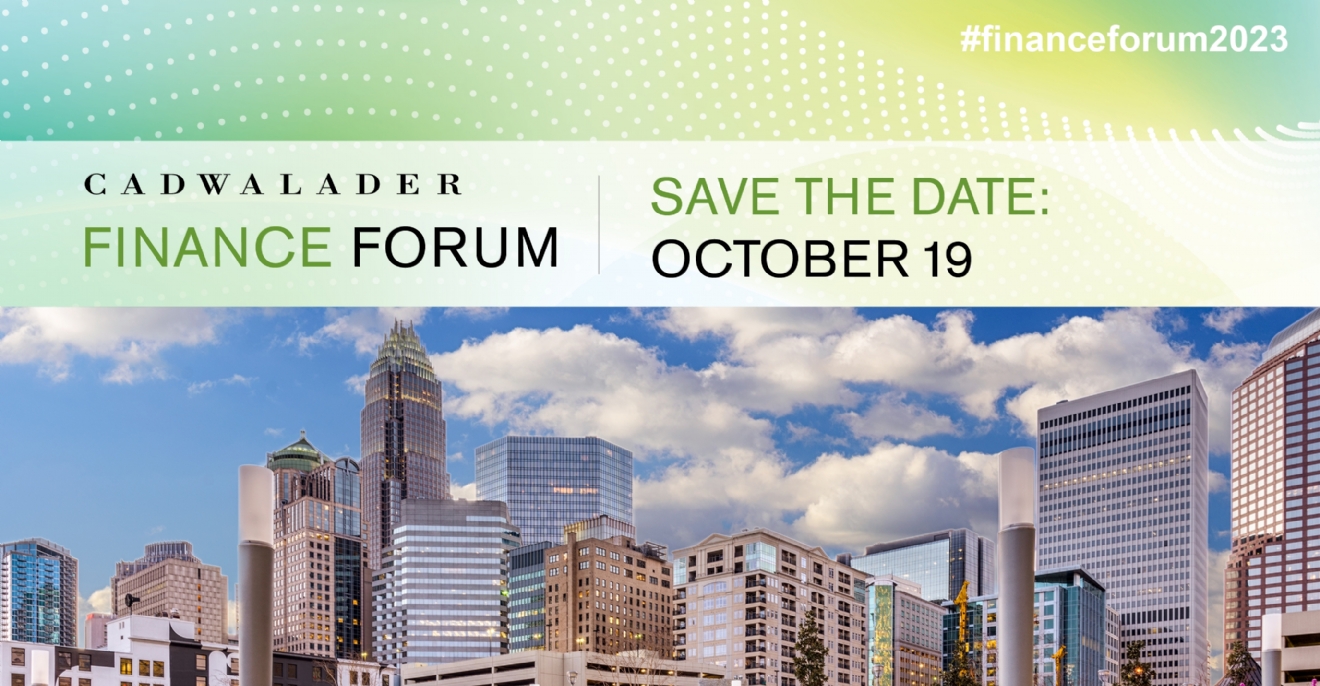
Are you registered yet? We are just a few weeks away and would love for you to join us for our seventh Annual Finance Forum on October 19 at The Ritz-Carlton in Charlotte.
Leaders from over 150 of the world’s top financial institutions are registered for an interactive day with the industry’s foremost experts. We are going to take deep dives into the wide range of challenges and opportunities that will shape the global financial landscape in 2024 and beyond.