





This Monday, Women in Fund Finance Boston is hosting "Spill the Beans: Secrets of Deception from a FBI Profiler," an exclusive luncheon and fireside chat with Dawn Norris Doak, a former leader in FBI's Behavior Analysis Unit.
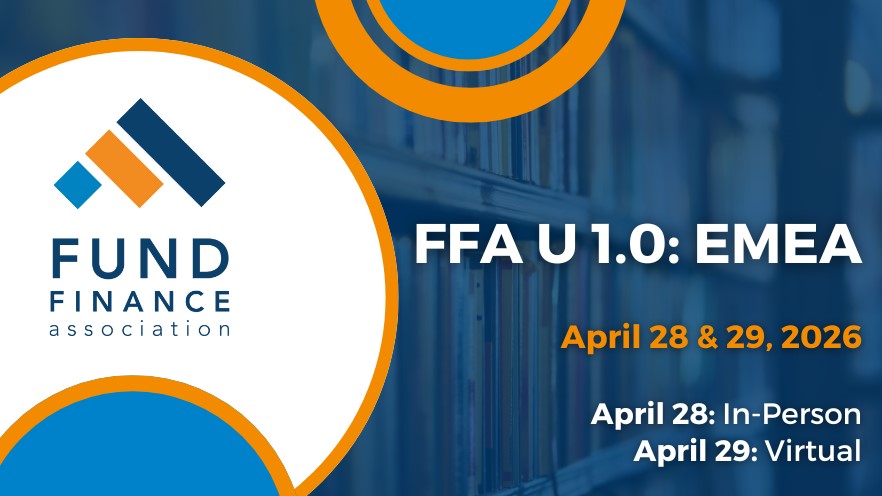
Now in its second year, FFA University 1.0 returns to London! Join the Fund Finance Association for this comprehensive two-day fund finance training program, offering a comprehensive look at the fund finance market through expert-led sessions on core products, legal and documentation considerations, market dynamics and key industry developments.

Join Women in Fund Finance Toronto on Tuesday, May 4 for Table Talks, a curated afternoon of dialogue and connection.

Many subscription facility lenders will offer management company facilities as a means to further develop their existing relationship with a fund sponsor.
On March 19, 2026, the Federal Reserve Board ("FRB"), Office of the Comptroller of the Currency (“OCC”) and Federal Deposit Insurance Corporation (“FDIC”, collectively, the “Agencies”) released (i) a revised proposal for Basel III Endgame applicable to Category I and II institutions (the “ERBA Proposal”) and (ii) proposed amendments to the existing standardized approach capital rules (the “Standardized Proposal”), about which Fund Finance Friday readers received our early read of the fund finance-related provisions in the March 20 newsletter.

Cadwalader partners Holly Chamberlain and Angela Batterson co-authored a Women’s History Month feature for Attorney At Law Magazine, noting that “there is no single blueprint for career progression in Big Law,” and that female attorneys may very well face additional challenges.
On Monday, April 13, Women in Fund Finance Boston is hosting "Spill the Beans: Secrets of Deception from a FBI Profiler," an exclusive luncheon and fireside chat with Dawn Norris Doak, a former leader in FBI's Behavior Analysis Unit.
Now in its second year, FFA University 1.0 returns to London! Join the Fund Finance Association for this comprehensive two-day fund finance training program, offering a comprehensive look at the fund finance market through expert-led sessions on core products, legal and documentation considerations, market dynamics and key industry developments.