





A lot of attention and press has been given to market volatility this year, including its impact on the fund finance industry. There is at least one sector of the fund finance industry that stands to benefit from this volatility. Because their investment strategies involve taking both long and short positions, many hedge funds are poised to benefit from market volatility, regardless of the direction of the market.
This article highlights some of the key features of financing structures used by funds of hedge funds.


A recent decision of the Court of Justice of the European Union (the EU’s highest court) has clarified some of its views on ‘asymmetric jurisdiction clauses’. An asymmetric jurisdiction clause is one that allows one party (typically a lender) a greater choice of forum for initiation of legal actions and enforcement than another party (typically a borrower).
The CJEU decision is of course quite technical and touches upon a number of EU laws, conventions and regulations (avid readers of CJEU materials can find the full text under reference C-537-23). While this isn’t the forum to explore its details in full, the decision has already begun to ripple into the fund finance world. This note explains why.
NLC Capital Partners launches open-ended Luxembourg based fund designed to deliver premium risk-adjusted returns through investment-grade, short-dated subscription line financing.
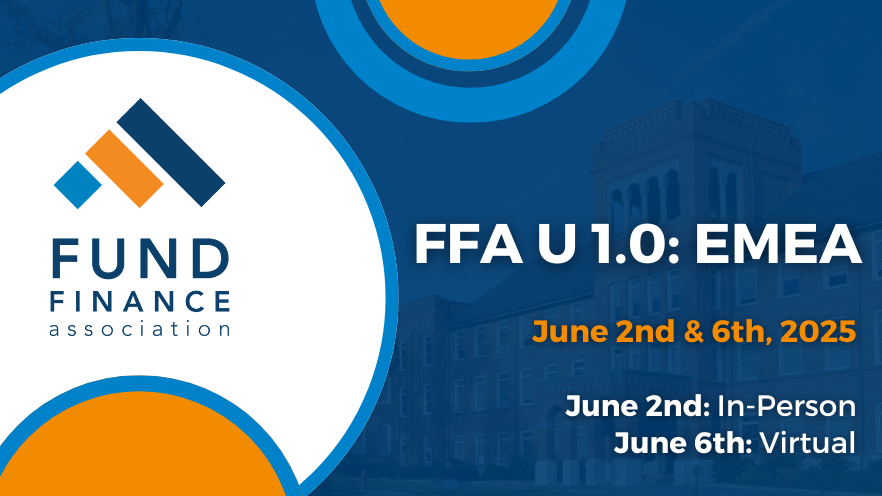
Join the FFA for a two-day Fund Finance training designed for newcomers and experienced professionals. The program offers a comprehensive look at the Fund Finance landscape, with sessions led by many of the industry’s leading senior practitioners including Cadwalader's own George Pelling.

Women in Fund Finance EMEA is excited to invite you to an evening of networking over drinks and canapés in London.
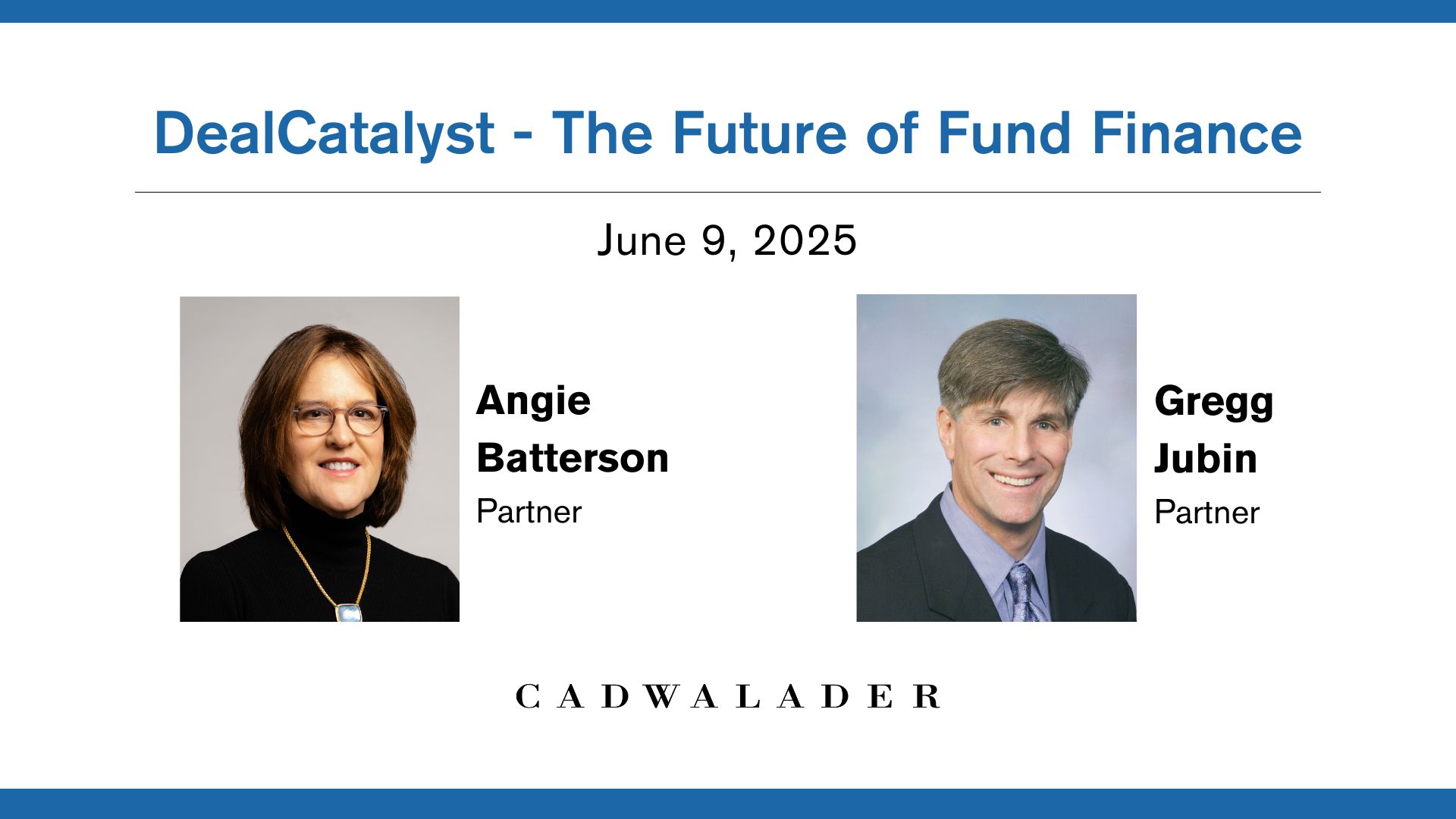
We’re looking forward to DealCatalyst Future of Fund Finance Conference on June 9 at the New York Marriot Downtown in Manhattan.
Cadwalader is proud to be a lead sponsor and have Partners Angie Batterson and Gregg Jubin speaking at the conference, sharing their insight on key industry topics.

Join your friends at Cadwalader and fellow industry peers for cocktails on our outdoor terrace following the DealCatalyst Future of Fund Finance Conference.

For many Americans, Memorial Day marks the beginning of summer – neighborhood pools open, patriotic decorations ornament yards, and friends and family gather for barbeques and outdoor fun. Amidst the three-day weekend, it’s easy to forget the true meaning of Memorial Day – a time for our nation to mourn and honor the United States men and women who lost their lives while serving in the United States Armed Forces.
In honor of this special American holiday and the brave Americans that have served or are serving in the United States Armed Forces, we sat down with Joe Beach, a Partner in Cadwalader’s Charlotte office and recently named Co-Chair of the Capital Markets practice. Joe specializes in a broad range of securitization and structured finance transactions, focusing primarily on CLOs and leverage on corporate credits, and is a leader in the growing Fund Finance securitization space. But before Joe’s successful legal career in private practice, he served as a Captain in the United States Army JAG, where he was named the Assistant General Counsel for Fiscal and International Law for the United States Army Corps of Engineers.