






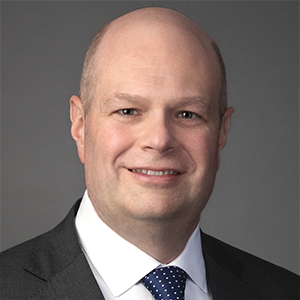
In remarks delivered at the American Bankers Association’s Washington Summit on March 11, 2026, FDIC Chairman Travis Hill outlined the agency’s ongoing effort to recalibrate the federal banking regulators’ supervisory and regulatory “toolkit.” Hill framed the initiative as part of a broader effort to simplify supervisory processes and focus regulatory attention more squarely on risks that materially affect bank safety and soundness.
Chairman Hill explained that the FDIC is seeking to move supervision away from what he described as an increasingly process-oriented framework toward one that concentrates on “issues that truly matter to a bank’s financial condition and compliance with the law.” The initiative forms part of a broader interagency effort to reassess supervisory tools and expectations following the banking sector stresses of three years ago.
A central component of the initiative involves clarifying supervisory standards and improving consistency in examination practices. Chair Hill highlighted recent work between the FDIC and the Office of the Comptroller of the Currency (OCC) to develop a proposal that would more clearly define key supervisory concepts, including what constitutes an “unsafe or unsound practice” and when examiners should issue supervisory findings such as Matters Requiring Attention (MRAs).
According to Chairman Hill, clearer definitions should help reduce uncertainty for banks while enabling examiners to concentrate supervisory attention on material financial risks and legal compliance issues. The FDIC has also begun reviewing existing supervisory recommendations to ensure they align with this more targeted approach.
Chairman Hill further indicated that the FDIC is working with the other federal banking agencies to evaluate potential updates to the CAMELS rating framework, which remains the primary system used by regulators to assess bank safety and soundness.
Chairman Hill also pointed to several recent changes to the FDIC’s approach to consumer compliance supervision. Among other steps, the agency has reduced the frequency of consumer compliance examinations for certain smaller institutions and has sought to ensure that supervisory criticisms are tied directly to violations of law rather than broader critiques of internal processes.
Chairman Hill also confirmed that the FDIC has eliminated the use of disparate impact analysis in fair lending supervision, emphasizing that supervisory findings should be grounded in statutory or regulatory violations rather than more open-ended policy considerations.
In what may have been the most newsworthy announcement in Chairman Hill’s remarks at the ABA, he stated that the FDIC plans to propose rules clarifying that payment stablecoins governed by the GENIUS Act would not qualify for pass-through deposit insurance, in order to avoid confusion regarding whether stablecoin arrangements provide access to insured deposits. At the same time, Chair Hill suggested that tokenized deposits—unlike stablecoins—should generally receive the same regulatory and deposit insurance treatment as traditional deposits where they satisfy the statutory definition of a “deposit.”
Chairman Hill indicated that these initiatives are part of a broader effort to reassess elements of the FDIC’s (and often the OCC’s and FRB’s) regulatory framework, including supervisory manuals, examiner training, and aspects of the agency’s capital, liquidity, and bank resolution regimes.
Taken together, Chairman Hill said the objective is to “right-size” bank regulation—reducing unnecessary complexity while preserving strong safeguards for financial stability and depositor protection.